The Digital Nomad's Guide to Bali
By James Elliot, Founder, Lodge Vacations · Published
Start here: visas, budgets, neighborhoods, and how to book a long stay without OTA markup.
Key takeaways
- Three visa routes cover remote work in Bali: the B211A (up to 180 days), the E33G Remote Worker KITAS (1 year, renewal terms vary by agency), and the Second Home Visa (5–10 years, $130,000+ deposit or $1,000,000+ property).
- A realistic monthly budget runs $1,000–1,500 for a simple setup, $1,600–2,200 mid-range, and $2,500+ for a comfortable villa lifestyle.
- Canggu, Ubud, and Uluwatu are the three main nomad hubs — each fits a different pace of work and life.
- No visa requires health insurance, but Indonesia has no public healthcare for foreigners, so budget for it separately.
- Booking directly with a host, instead of through an OTA, usually gets a better rate on stays of a month or longer.
Pick a visa before you pick a flight
The visa you qualify for decides how long you can stay, so it comes before everything else on this list. Three routes cover most remote workers.
| Visa | Length | Roughly costs | Fits |
|---|---|---|---|
| B211A | Up to 180 days | ~$450–650 via an agent | A first stay or a trial run |
| E33G Remote Worker KITAS | 1 year (renewal terms vary) | $600–1,100 first year | Committing to Bali for a while |
| Second Home Visa | 5 or 10 years | $130,000+ deposit or $1,000,000+ property | High-net-worth long-term residents |
All three allow remote work for a foreign employer or your own overseas business, but none of them let you take local Indonesian employment. The full visa guide below breaks down requirements and how each application actually works.
Verify before you apply
Visa fees, income thresholds, and renewal rules change, and agencies don't always describe them the same way. Treat the figures above as a starting reference, not a final quote — confirm current requirements with Indonesian immigration or a licensed visa agent before you commit.
Budget for more than the flight
Bali is cheaper than most nomad hubs in Western Europe or North America, but 2026 prices are well above what older "Bali on $30 a day" posts describe. Expect $1,000–1,500/month for a simple setup (shared or basic housing, mostly local food, a scooter), $1,600–2,200 for a private one-bedroom with a mix of local and Western food, and $2,500+ for a modern villa with AC and a more expat-standard lifestyle.
Housing is the biggest lever. A one-bedroom villa with a pool in Canggu now runs roughly $750–$1,150/month, and quieter areas like Ubud, Sanur, and Uluwatu tend to cost noticeably less for a similar setup.
Where to base yourself
- Canggu — the biggest nomad and coworking scene, best nightlife and food variety, but the most traffic and the highest rents.
- Ubud — quieter, greener, wellness- and culture-focused, generally cheaper than Canggu with a slower daily pace.
- Uluwatu — cliffside, surf-focused, more spread out, growing fast but still less built-up than Canggu.
Most people pick one area to start and adjust after a few weeks on the ground — a short stay before committing to a longer lease is worth the flexibility.
The logistics nobody warns you about
- Bank account — most banks require a KITAS to open a standard account; a few branches make exceptions.
- Health insurance — not required by any visa, but there's no public healthcare for foreigners in Indonesia.
- Safety — traffic and scooter accidents are the most common real risk, not crime.
- Internet — speeds vary a lot by building and area; check a specific stay's connection before you commit to it for work.
Booking a place to live
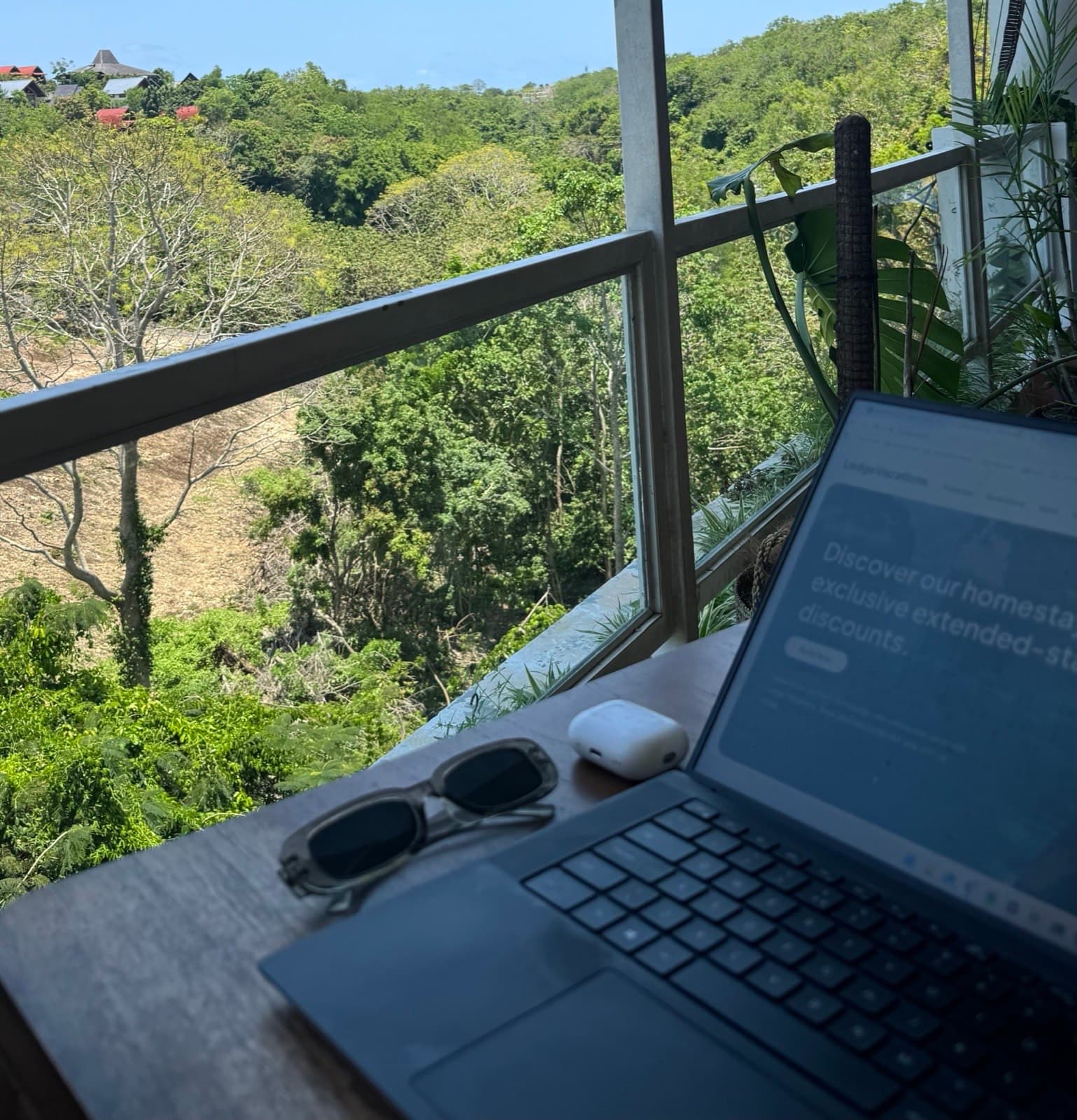
For stays of a month or longer, a homestay or guesthouse booked directly with the host is usually better value than a villa booked through a listing site that adds its own markup on top of the host's rate. Longer stays typically unlock a lower nightly rate the longer you commit, which matters more than almost anything else in the budget once you're past a few weeks.
Frequently asked questions
How long can I stay in Bali as a digital nomad?
Up to 180 days on a B211A visa (60 days plus two 60-day extensions), up to a year at a time on the E33G Remote Worker KITAS (renewal terms vary by agency — some describe an in-country renewal, others a fresh application after leaving), or 5–10 years on the Second Home Visa if you meet its deposit requirement.
Do I need a special visa to work remotely from Bali?
Yes. A tourist visa doesn't technically permit paid work, even for a foreign employer. The B211A and E33G Remote Worker KITAS are both designed to cover remote work for an overseas employer or your own business without allowing local Indonesian employment.
How much does it cost to live in Bali as a digital nomad?
A simple setup runs roughly $1,000–1,500/month, a private one-bedroom with a mixed local/Western lifestyle runs $1,600–2,200, and a comfortable villa lifestyle runs $2,500 or more. Housing and how often you eat Western-style food are the two biggest swing factors.
Is Bali a good place to start out as a digital nomad?
Yes — it has one of the largest established nomad communities anywhere, extensive coworking infrastructure, and a wide range of housing and price points, which makes it easier to land somewhere workable even without much local knowledge going in.
Can I book long-term accommodation in Bali before I arrive?
Yes. Direct-booking platforms let you secure a homestay or guesthouse for a month or longer before you land, which removes the need to book a short-term stay first just to house-hunt in person.
Sources
The figures in this guide are drawn from the sources below. Visa fees, income requirements, and rental prices change — confirm current numbers before you make a decision based on them.
- 1.B211A Visa Guide — Indonesian Visas
- 2.Bali B211A Visa Cost — VisaStation
- 3.E33G Remote Worker Visa Indonesia — Emerhub
- 4.Second Home Visa Indonesia (E33) — Emerhub
- 5.Cost of Living in Bali — Numbeo
- 6.Digital Nomad Cost of Living in Bali 2026 — Asia Lifestyle Magazine
Ready to book direct in Bali?
Lodge connects you with hosts directly — 0% host commission means hosts keep their full offline rate, and you avoid OTA markup on longer stays.
Browse long-stay homestays in Bali →